
Beef Tallow Skincare, Used for Generations
For thousands of years, people cared for their skin with what nature provided. And it worked. The modern cosmetics industry changed that, pushing simple, skin aligned ingredients aside in favor of mass production, synthetic alternatives and the profit margins of global corporations.
Beef tallow is not a new discovery. It is something we are learning to value again. A return to conscious, clean skincare in a world where ingredient lists have become increasingly complex.
Reading the ingredient list is a good start
But some of the most important things will never appear on the label.
What you do not see often makes the greatest difference: where the raw material comes from and how it is prepared.
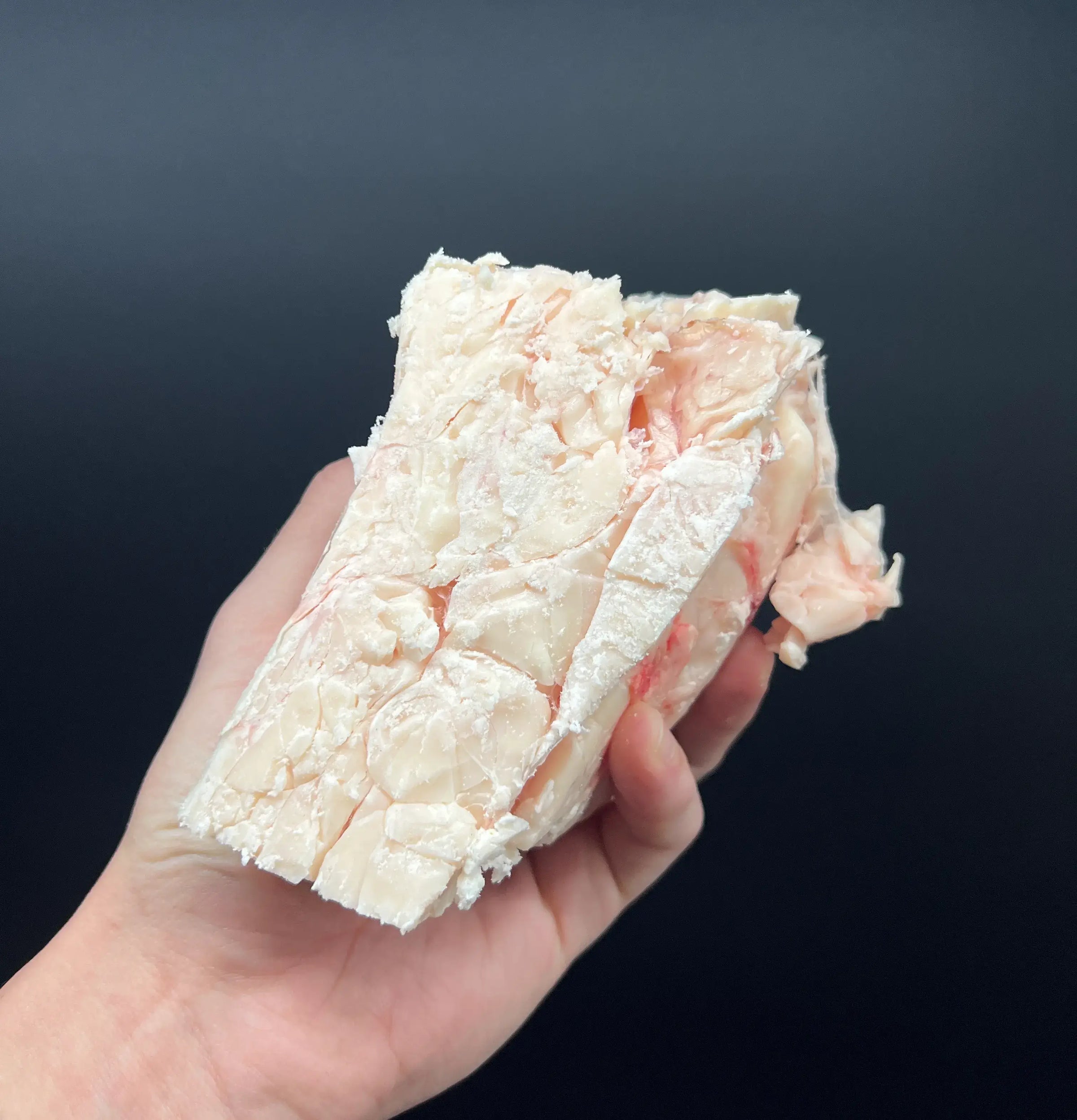
The same ingredient? Not quite
Most brands rely on ready made, mass produced bases, and today cosmetic beef tallow is easy to find almost anywhere. Since 2023, we have worked without interruption with our own raw material, which we select, cut, render and refine ourselves to our own strict standards.
It is a more demanding path, but only full control over the source and the process lets us preserve what is most valuable in tallow and stand behind the quality in every single jar.
-
Fats, because they matter
Beef tallow contains triglycerides and fatty acids with a composition close to the lipids found in the outer layers of our skin. This biological compatibility is why we treat tallow as the basis for matching skincare to what the skin truly needs.
-
Vitamins from a single source
Beef tallow gives the skin a profile of essential vitamins: A, D, E, K and B12. Thanks to its high biocompatibility, its natural fat structure works as an ideal carrier, helping nutrients pass more easily through the skin barrier.
-
Less processing
Modern cosmetics often rely on many complex components. Beef tallow stays simple in structure, with a short path from source to finished product. That simplicity is exactly why it is seeing a revival in modern skincare.
There is more inside than you would think
Look a little closer and you will see that tallow is far from ordinary fat
FATTY ACIDS
Linoleic (omega 6) and alpha linolenic (omega 3) acids support the skin's barrier structure and function, and help with inflammatory and immune responses in the skin, including eczema and rosacea.
Conjugated linoleic acid (CLA) with natural anti inflammatory and antibacterial properties.
Stearic acid supports the repair of damaged skin and improves its firmness and elasticity.
Palmitoleic acid (omega 7), one of the basic building blocks of our skin, limits water loss and helps soothe irritation.
Oleic acid (omega 9) supports the protective barrier and helps other ingredients absorb deeper into the skin.
Palmitic acid strengthens the skin's natural protective barrier, prevents water loss and shields it from external factors.
VITAMINS
Vitamin A supports the production of collagen, elastin and healthy skin cells, and strengthens the tissue, helping to keep the skin firm.
Vitamin D supports the growth and renewal of skin cells and takes part in metabolic and immune processes. It also protects the skin against free radicals.
Vitamin E is a powerful antioxidant that helps neutralise free radicals and protects the skin from their effects.
Vitamin K influences the skin's tone, structure and overall condition, soothes inflammation and speeds up wound healing.
Vitamin B12 is valued in the care of sensitive, redness prone skin. It is associated with a soothing effect and support for the skin's renewal.
AND THERE IS MORE
Minerals and antioxidants tallow also contains naturally occurring minerals and antioxidants found in fats of animal origin.
A close match to sebum the composition of tallow closely resembles sebum, the natural lipid layer on the surface of the skin. It is no coincidence that sebum is simply the Latin word for tallow.
Fewer steps, more control unlike complex recipes, tallow needs only a few steps between raw material and finished product. This simplifies the process and makes it easier to control what actually reaches the skin.

Your skin does not respond to labels
Today, skincare is full of claims, promises and trendy labels. Non comedogenic is one of them, yet in practice it has no single, universal standard.
What truly matters is biocompatibility, the ability of ingredients to work in harmony with the skin and be recognised by it as its own.
Beef tallow remains one of the raw materials most aligned with the skin's natural lipid layer. It has stood the test of time and today it is finding its place in skincare once again.

What about grass-fed?
In the world of cosmetics, it is easy to reduce everything to a label. We carefully select and verify where our raw material comes from, because what an animal eats also affects the quality of the fat.
Tallow from pasture raised cows fed solely on grass naturally contains higher levels of vitamin E and a more balanced fatty acid profile.
That is why, for years, we have worked with the best European organic farms, where it is standard for animals to be fed in line with the natural rhythm and diet of ruminants.
Beef tallow: facts, not myths
DOES TALLOW CLOG PORES?
No. The structure of tallow is very close to sebum, the skin's natural lipid layer, so the skin recognises it as its own and tolerates it well, including blemish prone skin. What matters, though, is purifying the tallow properly for cosmetic use, as it can contain protein residues and impurities that sometimes cause irritation. That is why we purify our raw material ourselves, so we can control at every stage what later reaches your skin.
IS TALLOW BETTER FOR THE SKIN THAN SEED OILS?
It is not about being better, but about working differently. Tallow is a saturated fat with a structure close to sebum, so the skin recognises it as its own. That is why we treat it as a base that nourishes and supports the lipid barrier. Good quality, cold pressed seed oils such as jojoba play a complementary role, and we choose them deliberately. What we avoid are cheap, highly processed oils from mass monocultures that form the basis of industrial cosmetics. For the skin, then, the point is not "tallow or oil", but the quality and function of each ingredient.
ARE TALLOW COSMETICS A MARKETING GIMMICK, OR SOMETHING MORE?
It is something far older than any trend. Tallow has been used in skincare for generations, long before the cosmetics industry existed, and this is the tradition we are returning to. This approach is called ancestral skincare, skincare based on ingredients that people used successfully for centuries. Tallow fits into it perfectly, because it is a natural alternative to drugstore cosmetics and makes it possible to create a routine free from common synthetic ingredients and popular petroleum derivatives. For us, this is not a gimmick, but a return to what proved itself long before the marketing and industrialisation of every branch of human life.
IS USING TALLOW ETHICAL?
There is no single, simple definition of what counts as ethical in skincare, and the topic too often gets reduced to easy assumptions. Vegan does not automatically mean kinder to the planet. Large scale crop farming reshapes ecosystems and erodes biodiversity, and the machinery and pesticides involved take their own toll on the animals living in and around the fields. Many synthetic alternatives, meanwhile, are built on petrochemicals that carry a real environmental cost of their own. For us, ethics is not about a label, but about taking responsibility for where an ingredient comes from. Our tallow comes from animals raised for consumption, and for years raw suet was simply discarded as waste. Instead of being thrown away, it now finds a genuine purpose, and we know exactly where it comes from and how the animals were treated.
IS TALLOW IN COSMETICS THE SAME AS FAT FROM THE KITCHEN?
No, it is not about smearing yourself with frying fat, though if you have a good source, your skin tolerates it and your loved ones can put up with the smell, then honestly, why not. On a serious note, it is the same raw material but a completely different standard of preparation and purpose. Cosmetic tallow goes through a different selection, purification and quality control, so it meets the cleanliness and safety standards required for contact with the skin. Food grade raw material is intended for eating and undergoes different testing than what is required in cosmetics, so it is not prepared for direct contact with the skin.
DOES YOUR BEEF TALLOW HAVE A GRASS-FED CERTIFICATE?
No, because such a certificate does not exist yet. In Poland there is currently no body that would verify how animals are fed and certify cosmetics at the same time, so there is nothing to be awarded. Our grass-fed is not a sticker but our own, rigorous selection system that we have been building for years in cooperation with the best farms in Europe, where animals are fed solely on grass, in line with the natural diet of ruminants. We control the origin of the raw material at every stage, from the farm to the finished product. At the same time, we are talking with certifying bodies and are open to support such a standard being created, for both food and cosmetics across the entire European Union.
Sources:
Russell MF, Sandhu M, Vail M, Haran C, Batool U, Leo J. Tallow, Rendered Animal Fat, and Its Biocompatibility With Skin: A Scoping Review. Cureus. 2024;16(5):e60981. doi:10.7759/cureus.60981
Picardo M, Ottaviani M, Camera E, Mastrofrancesco A. Sebaceous gland lipids. Dermatoendocrinology. 2009;1(2):68-71. doi:10.4161/derm.1.2.8472